


Sanskrit language and Literature/ Srijiva Nyāyatirtha / Pandava-Vikramam/ Jagadhatri Press/ Publication: 1985/ Number of Pages: 286/
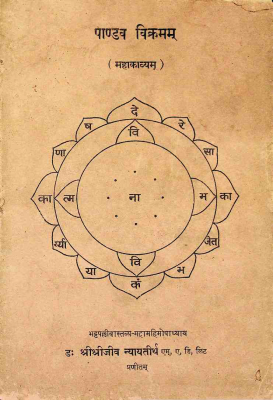
Pandava-Vikramam पाण्दब् बिक्र्म्म्
Pandavavikramamam is a modern-day epic composed by Srijiva Nyāyatīrtha. The main storyline of the epic is borrowed from Vana Parva and Virata Parva of Mahābhārata. The epic depicts the heroic acts of the Pāndavas during their exile, sometimes living incognito.
| System |
* |
|---|---|
| Publication Category |
Sanskrit Language and Literature |
| Publication Author | |
| Added Author |
* |
| Publication Language |
Sanskrit |
| Publisher Name |
Jagadhatri Press |
| Publication Place |
Calcutta |
| Publication Year |
1985 |
| Series Name |
* |
Kindly Register and Login to Darshan Manisha Digital Library. Only Registered Users Can Access the Content of Darshan Manisha Digital Library.
0
People watching this product now!
Description
Related products


Meghduter Bhumika মেধদূতের ভূমিকা
Meghduter Bhumika is a critical assessment of the contribution of Kalidasa with special reference to Meghaduta. Parbaticharan Bhattacharya, the author of this book, offers an introduction to the literary and philosophical ideas embedded in Meghaduta. The author locates Meghaduta in the general category of the dutakavya.

Kalidaser Granthabali (Volume-3) কালিদাসের গ্রন্থাবলী
Kalidaser Granthavali (third part) is a Bengali translation and explanation of Abhijnanasakuntalam, Vikramovasiyam and Dwatrinsat-Puttalika. In the introduction, Rajendranath Vidyabhusan, the translator and the editor, briefly presents the debate concerning the time of Kalidasa and the significance of his contribution.



History of Sanskrit Poetics (by P. V. Kane)
History of Sanskrit Poetics by P.V.Kane is a historical survey of Sanskrit Poetics. The book is divided into two parts. The first part consists of thirty-nine chapters where the author presents the main contents of the major world in Sanskrit Poetics. The second part contains sixteen chapters where one finds a brief survey of the main theories in this field showing how these different literary theories evolved in the course of history.