

Publications


Nāgānanda
Nāgānanda is an English translation along with explanatory notes on the drama Nāgānanda written by Harshadev. Asha Toraskar and N.A.Deshpande, editors and translators, offer a brief analysis of the contribution of Harshadeva in their introduction. A commentary written in Sanskrit, on Nāgānanda, by M.R. Kale has also been added to this book.

Natural Science of the Ancient Hindus
In this book, written by Surendranath Dasgupta, one finds an analysis of some of the ideas in Natural Science as entertained in classical India. The book contains three parts: 1. Matter and Motion, 2. Theories of Cosmic Changes and 3. Genesis of Tanmāntras. This book offers an exposition of several scientific ideas as available in the classical Indian texts.

Navya-Nyāya Bhāṣāpradīpaḥ नब्य-न्याय भाषाप्रदीप:
The present book, written by Maheśa Chandra Nyāyaratna, translated and explained in Bengali by Kalipada Tarkāchārya, is an attempt to explain the meaning of some of the technical terms used in Navya-Nyāya philosophy. Since many of these terms like dharma, abhāva, lakṣaṇa etc. are used in many classical systems of Indian philosophy, understanding the significance of these terms is a prerequisite in the study of many schools of Indian philosophy.

Neo Hegelianism
The present book is a historical introduction to the philosophical movement known as Neo Hegelianism. This book is divided into fifteen chapters where the contributions of T.H.Green, Edward Caird, John Caird, William Wallace, D.G.Ritchie, F.H.Bradley, Bernard Bosanquet, John Watson, Henry Jones, J.H.Muirhead, J.S.Mackenzie, Lord Haldane and J.E.McTaggart have been presented. In the appendix is an essay entitled ‘Hegelianism and Human Personality’ where the author articulates how to own understanding of Hegel’s philosophy and its significance.

Nicolai Hartmann and Alfred North Whitehead: A Study in Recent Platonism
This book, written by J.N.Mohanty, is a comparative study of Idealism as found in the works of Hartmann and Whitehead. The book contains four chapters: 1. Nichilao Hartmann’s Philosophy of Ideal Being, 2. A.B.Whitehead’s Doctrine of Eternal Objects, 3. Nicholai Hartmann and Alfred North Whitehead: A critical and Comparative Study and 4. Conclusions. The author presents how Platonism has been articulated in the works of these two philosophers.


Niruktam নিরুক্তম
Brahmacari Medhacaitanya, in this book, offers a detailed analysis of several Vedic words understanding which is absolutely essential for knowledge of the Vedic sentences. The Vedic terms have been classified under several categories and different grammatical forms of these words have been explained. This is why Nirukta is regarded as a Vedāṅga.


Nyāya Darśne Parāmarśa ন্যায় দর্শনে পরামর্শ
This book, written by Aruna Chakrabarti, offers an analysis of the role of parāmarśa in the generation of inferential knowledge. The book is divided into five chapters: 1. The nature and definition of parāmarśa, 2. Kinds of parāmarśa, 3. Parāmarśa as the cause or vyāpāra , 4. Parāmarśa as the cause of anumiti and 5. The relation between pakṣata and parāmarśa. Since Inference is a recognized source of knowledge for Nyāya, an analysis of parāmarśa as the cause of inferential knowledge forms an integral part of any discussion on Nyāya epistemology.

Nyāya Praveśa ন্যায়প্রবেশ
This book is an introduction to Nyāya philosophy. Amarendra Mohan Bhattacharya, the author of this book, presents his analysis in eight chapters: 1. Introduction, 2. Determining padārtha, 3. Determining dravya, 4. Determining guṇa, 5. Determining karma etc. 6. Determining abhāva, 7. Determining sixteen padārthas, 8. Determining other padārthas. This book is an attempt to present the fundamentals of Nyāya philosophy in the Bengali language.

Nyāyadarśan Mate Ātmā ন্যায় দর্শন মতে আত্মা
In this book, written by Tarapada Bhattacharya, one finds an elaborate analysis of the Nyāya theory of self. Following a discussion of the proofs for the existence of self, one finds deliberations on the nature of self as distinct from body. Nyāya arguments for the view that self is eternal and has attributes have been presented. The plurality and ubiquitous nature of self have been proved. The question about the emancipation of self has been discussed. The book ends with a discussion on the nature of god as paramātmān.

Nyāyakusumāñjali (Part-1)
The present book, edited by Narendrachandra Vedantatirtha, contains the original text (first Stavka) of Nyāyakusumāñjali along with the commentaries of Śaṅkara Miśra and Guṇānda Vidyāvāgīśa. These commentaries explain the original text sometimes by elucidating the original points and sometimes refuting the alternative conclusions. The entire first chapter of this book centres around the possible objections to the nature of causality that Nyāya argument for the existence of god depends on.

Nyāyamañjuri (Volume-1) (ন্যায়মঞ্জুরী ( ১ম খন্ড))
Nyāyamañjari (Vol 1) is a detailed Bengali translation and explanation of the original Sanskrit text Nyāyamañjari written by Jayanta Bhaṭṭa. The translation and Explanation are done by Pañcānana Tarkavāgīśa. The present volume starts with a discussion on the necessity of the study of Nyāya and ends with a presentation of the Nyāya theory of abhāva.

Nyāyamañjuri (Volume-2) ন্যায়মঞ্জুরী (২য় খন্ড)
This book written by Pañchānana Tarkavāgīṣa, is an exposition of the chapter on perception as one finds in Nyāyamañjuri There is a detailed analysis of the definition of perception as proposed in Nyāyamañjuri. A critical examination of each of the terms present in the definition of perception has been undertaken, In this context, the Buddhist view regarding denying the veridicality of judgemental perception has been presented and refuted.

Object Content and Relation
This book by Kalidas Bhattacharyya considers the relation between Consciousness and it’s Object. Once we ask the question “Is there anything intermediate between consciousness and object?”, we come up with the answer “Content”. Now, what is this Content and is there such an intermediate thing between Consciousness and Object? This is a question that needs to be answered. This book explores the relationship between Objects and Consciousness via the idea of Content. The book is divided into two chapters. This first chapter is on “Object and Content”. The second is on “Relation”. The first chapter deals with:
- Analysis of Thought and Memory
- Analysis of Perception: Idealism and Realism
- Analysis of Perception – Illusion as to Judgment
- Some Theories of Illusion Examined
- Content and Object as Alternatives
- Criterion of Reality
- Real and Non-Real Appearances
- The Notion of Relation
- Classification of Relations
- The So-called Puzzles of Relation
- Relation – Is it Subjective, Objective or Dialectical?
- External and Internal Relation
- Some Theories of Relation

On The Concepts of Relation and Negation in Indian Philosophy
The present book, written by Kalidas Bhattacharya, offers an analysis of the two important Indian philosophical notions, viz. relation and negation. Both these notions have been formulated by Indian philosophers and have been applied to advance their respective metaphysical and epistemological theses. The author brings in several corresponding ideas from Western philosophy to highlight the uniqueness of these two notions as formulated by classical Indian philosophers.

On the Dramatic System of The Hindus
Of the Dramatic System of the Hindus is a short treatise on the salient features of classical Sanskrit Drama. Horace Hayman Wilson divides the book into eight chapters starting with a description of the authorities of the Hindu dramatic system and ending with a description of the scientific apparatus.

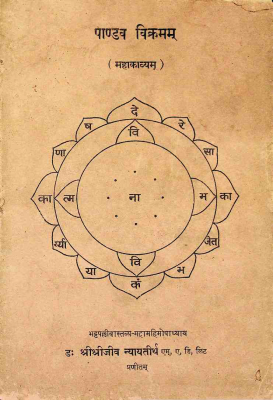

Pāṇinidarśanam
The present book is an analysis of the chapter on Pāṇini’ s philosophy as found in the Sarvadarśanasaṃgraha of Mādhavāchārya. Chinmayi Chatterjee, the author of this book, offers a detailed analysis of Mādhavāchārya’s formulation of the central philosophy of Pāṇini, the grammarian. The book discusses the idea of sphoṭa as advocated by Panini as well as the criticisms of sphoṭa as advanced by different philosophers. The correlation between word and its meaning has also been taken up for discussion.


Phenomenology and Indian Philosophy
Phenomenology and Indian Philosophy is a collection of essays edited by D.P.Chattopadhyaya, Lester Embree and J.N.Mohanty. There are twenty-six essays in this volume and all the essays deal with several aspects of phenomenological philosophy and study these insights from the perspective of classical Indian philosophical standpoint. The last essay in this volume, authored by D.P.Chattopadhyaya, contains a philosophical evaluation of the salient points that emerge from the essays in the collection.

Phenomenology: East and West (Essays in Honor of J.N.Mohanty)
Phenomenology: East and West is a collection of essays on the philosophy of J.N.Mohanty. This book is edited by Frank M.Kirkland and D.P.Chattopadhyaya. All the essays deal with various aspects of Mohanty’s philosophical views ranging from his exploration of theory of meaning to articulating the possibility of transcendental philosophy.

Philosophical Foundation of Bengal Vaisnavism
In this book, written by Sudhir Chandra Chakrabarti, one finds a detailed exploration of the philosophical ideas as found in the Vaiṣṇava philosophical school of Bengal. The philosophy of achintyabhedābheda has been explained. The nature of bhakti as the means of attaining the ultimate goal of human life viz. Love for God has been elucidated. The aesthetic significance of the conception of Krṣṇa as the embodiment of all rāsas have been presented. The fifteen chapters in the book are 1. The attitude towards epistemology, 2. The psychological basis of knowledge and the nature of the error, 3. A synoptic view of Bengal Vaiṣṇavism, 4. Jīva Goswamin’s conception of Bhagavat, 5. The Bhagavat as the Ground of Jīva-śakti and Māya-śakti, 6. The doctrine of Causation in Bengal Vaiṣṇavism, 7. Kriṣṇa and His incarnations, 8. Bhakti, the means of God-Realisation, 9. The supreme realisation, 10. Bengal Vaiṣṇavism and Kierkegaard’s Existentialism, 11. The Place of Ethics in Bengal Vaiṣṇavism, 12. Acintya-Bhedābheda, 13. Rāsa (Relish), 14. Christianity and Bengal Vaiṣṇavism, 15. Conclusion.

Philosophy and Religion
The present book is a collection of essays written by J.L.Mehta. The essays are attempts to understand and interpret various aspects of classical Indian philosophical, religious and cultural ethos. Being inspired by Heideggerian hermeneutics, the author tries to disclose the hidden ideas present in different ancient Indian philosophical-religious ideas. All these essays interpret the historicity of some salient ideas and bring out their significance to the modern reader.

Philosophy of Science Phenomenology and the Other Essays
Philosophy of Science, Phenomenology and Other Essays is a collection of essays written by D.P.Chattopadhyaya. There are twenty-one essays in this volume. All the essays harp on several questions related to philosophy of science. The essays are divided into six sections: 1. Science and Consciousness, 2. Aspects of Knowledge, 3. Phenomenology of Knowledge and Freedom, 4. On Being and Becoming, 5. Causation and Freedom of Action and 6. Some ideas of Sri Aurobindo.

Philosophy, Logic and Language
This book by Kalidas Bhattacharyya is a collection of essays on different topics. However, the first seven essays and the eleventh one do have a thematic unity. They are in one way or another linked to the questions regarding the nature and method of philosophy – a theme that we find often in the writings of Kalidas Bhattacharyya. Essays 1 to 5 and essay 6 are directly concerned with the role of language and logic in philosophical reflections. He touches upon Logical Positivism and Analytical Philosophy in this regard.
The other key issue that Bhattacharyya considers here is the nature of Self. In particular, Bhattacharyya has been keen on exploring the nature of the self we refer to by the pronoun “I” and its relation to the other selves.
The concept of God also finds its place in two of his essays here. Bhattacharyya also discusses the problem of freedom in almost all the essays, in particular the ones on self. One interesting yet rather divergent topic that is discussed by Bhattacharyya is the idea of the Given and its Appearance. Two essays are on specific philosophers – one on Rabindranath Tagore and another on Basanta Kumar Mallik.
The Essays are:
- Is Philosophy Linguistic Analysis
- The Business of Philosophy
- Language, Logic and Fact
- Objective Attitude and Idealism Proper
- Thought and its Validity
- The Given and its Appearance
- The Nature of Reflection in Metaphysics
- Modern Psychology and Hindu Thought
- Self and Others
- The Concept of Self in Buddhism
- Formal and Actual Freedom
- Approaches to Spiritual Life
- Studies in Ethical Theory
- A Modern Defense of Orthodoxy
- Rabindranath on Religion
- An Aspect of Mallik’s Philosophy
- Classical Philosophies of India and the West
- An Outline of Indian Philosophy
