

Publications


Bhāṣā-Paricchedaḥ भाषा- परिच्छेद:
The author of the present book, Pañcānana Śāstrī, offers a detailed presentation of the views of Viśvanāth Nyāyapañcānana. This discussion follows the Nyāya-Vaiśeṣika school. There are five chapters in the book: 1. Pratyakṣakhanḍa, 2. Anumānakhanḍa, 3. Upamānakhanḍa, 4. Śabdakhanḍa and Guṇakhanḍa. Some of the key ideas on Nyāya-Vaiśeṣika school have been analysed in this book.

Bhatti-Kavyam ভাট্টিকাব্যম
Bhattikavyam is a Bengali rendering, along with the original text, of the four cantos of Bhattikavyam, originally written by Bhartrihari. The details like name of the editor etc. are missing. This book also contains two commentaries on Bhattikavyam viz. Vidyavinodatika and Bharatatika in original Sanskrit. This book also contains the commentary of Mallinatha on all four cantos of Bhattikavyam.


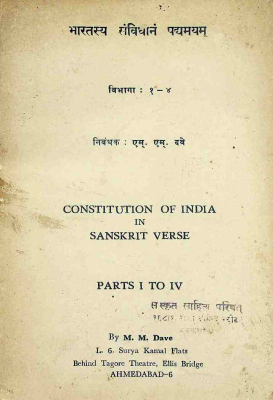
Constitution of India In Sanskrit Verse (Parts I to IV) भारतस्य संबिधानं पद्य्म्यम्
Constitution of India in Sanskrit Verse is a Sanskrit translation in verse form of parts I-IV of the Indian Constitution. M.M. Dave, the translator, argues that the Sanskrit translation of the Indian Constitution often expresses the message more clearly than in any other language. He urges the politicians, and the lawyers to use these Sanskrit translations.


Īśvarasiddhivivecanam (Part-II) ईश्वर – सिद्धि – विवेचनम्
This book written by Dīnanāth Tripathi contains a discussion on the Mīmāṃṣā argument that tries to prove that one does not need to prove god since the consequences like attainment of svarga etc. are the results of the performance of Vedic sacrifices. In this context, the author explains the Nyāya view that justifies the existence of god in terms of parataḥ prāmānyavāda. The author also presents the Nyāya arguments against the Sāṃkhya view and concludes that if the views of Kapila etc are accepted, then the prāmānya of the Vedas would be threatened.


Kāvyapradīpa काब्यप्रदीप:
Kāvyapradīpa is working on classical Sanskrit Aesthetics written by Govinda. The present work contains a commentary on the original text by Vaidyanatha Tatsat. The complete work is edited by Durgaprasada and Wasudev Laxman Shastri Pansikar. Through the ten chapters, the author presents and analyzes the different views on Sanskrit Aesthetics.

Kiratarjunuyam (Canto-II)
Kiratarjuniyam is an English rendering and explanation of the second canto of Kiratarjuniyam written by Bharavi. Saradaranjan Ray, the editor of the book, has added Mallinatha’s commentary along with its translation in English. The book also contains a Bengali translation of the second canto of the original Sanskrit text.


Mudrarakshasam
Mudrarakshasam is translation, both in Bengali and English, of the drama Mudrarakshasam has originally written in Sanskrit by Visakhadatta. Bidhubhsan Goswami, in his introduction, presents a brief analysis of the special characteristics of the drama. All the seven cantos are presented in original Sanskrit along with their translation.

Navya-Nyāya Bhāṣāpradīpaḥ नब्य-न्याय भाषाप्रदीप:
The present book, written by Maheśa Chandra Nyāyaratna, translated and explained in Bengali by Kalipada Tarkāchārya, is an attempt to explain the meaning of some of the technical terms used in Navya-Nyāya philosophy. Since many of these terms like dharma, abhāva, lakṣaṇa etc. are used in many classical systems of Indian philosophy, understanding the significance of these terms is a prerequisite in the study of many schools of Indian philosophy.


Nyāyakusumāñjali (Part-1)
The present book, edited by Narendrachandra Vedantatirtha, contains the original text (first Stavka) of Nyāyakusumāñjali along with the commentaries of Śaṅkara Miśra and Guṇānda Vidyāvāgīśa. These commentaries explain the original text sometimes by elucidating the original points and sometimes refuting the alternative conclusions. The entire first chapter of this book centres around the possible objections to the nature of causality that Nyāya argument for the existence of god depends on.
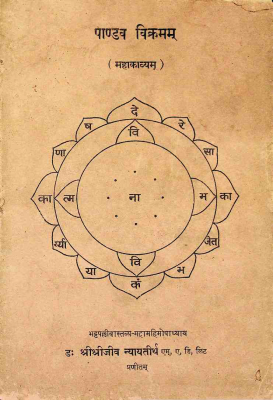

Pāṇinidarśanam
The present book is an analysis of the chapter on Pāṇini’ s philosophy as found in the Sarvadarśanasaṃgraha of Mādhavāchārya. Chinmayi Chatterjee, the author of this book, offers a detailed analysis of Mādhavāchārya’s formulation of the central philosophy of Pāṇini, the grammarian. The book discusses the idea of sphoṭa as advocated by Panini as well as the criticisms of sphoṭa as advanced by different philosophers. The correlation between word and its meaning has also been taken up for discussion.


Prabodhchandroya Natakam প্রবোধচন্দ্রোদয় নাটকম
Prabodhachanrodaya Natakam is a Bengali translation of the original drama Prabodhachanrodaya written by Sri Krishna Mishra. The book contains the original text in Sanskrit along with a Bengali translation. One of the interesting features of this drama is that the characters in the drama are known as jealousy, egoism, lust, anger etc.