

Sanskrit Language and Literature

Kāvyapradīpa काब्यप्रदीप:
Kāvyapradīpa is working on classical Sanskrit Aesthetics written by Govinda. The present work contains a commentary on the original text by Vaidyanatha Tatsat. The complete work is edited by Durgaprasada and Wasudev Laxman Shastri Pansikar. Through the ten chapters, the author presents and analyzes the different views on Sanskrit Aesthetics.

Kiratarjunuyam (Canto-II)
Kiratarjuniyam is an English rendering and explanation of the second canto of Kiratarjuniyam written by Bharavi. Saradaranjan Ray, the editor of the book, has added Mallinatha’s commentary along with its translation in English. The book also contains a Bengali translation of the second canto of the original Sanskrit text.
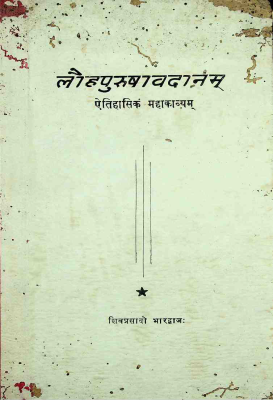


Meghduter Bhumika মেধদূতের ভূমিকা
Meghduter Bhumika is a critical assessment of the contribution of Kalidasa with special reference to Meghaduta. Parbaticharan Bhattacharya, the author of this book, offers an introduction to the literary and philosophical ideas embedded in Meghaduta. The author locates Meghaduta in the general category of the dutakavya.

Mudrarakshasam
Mudrarakshasam is translation, both in Bengali and English, of the drama Mudrarakshasam has originally written in Sanskrit by Visakhadatta. Bidhubhsan Goswami, in his introduction, presents a brief analysis of the special characteristics of the drama. All the seven cantos are presented in original Sanskrit along with their translation.

Nāgānanda
Nāgānanda is an English translation along with explanatory notes on the drama Nāgānanda written by Harshadev. Asha Toraskar and N.A.Deshpande, editors and translators, offer a brief analysis of the contribution of Harshadeva in their introduction. A commentary written in Sanskrit, on Nāgānanda, by M.R. Kale has also been added to this book.

On the Dramatic System of The Hindus
Of the Dramatic System of the Hindus is a short treatise on the salient features of classical Sanskrit Drama. Horace Hayman Wilson divides the book into eight chapters starting with a description of the authorities of the Hindu dramatic system and ending with a description of the scientific apparatus.
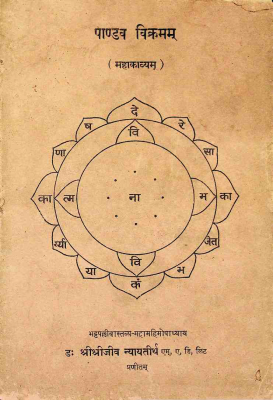


Prabodhchandroya Natakam প্রবোধচন্দ্রোদয় নাটকম
Prabodhachanrodaya Natakam is a Bengali translation of the original drama Prabodhachanrodaya written by Sri Krishna Mishra. The book contains the original text in Sanskrit along with a Bengali translation. One of the interesting features of this drama is that the characters in the drama are known as jealousy, egoism, lust, anger etc.
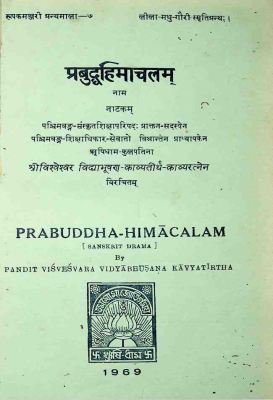

Prahelika Sangraha প্রহেলিকা সংগ্রহ
Prahelika Saṁgraha is a collection of short verses, both in Sanskrit and Bengali, that apparently depicts meaning not in a straightforward manner. It is a kind of puzzle that friends or people assembled in family gatherings like weddings etc participate in. The book is written by Kalinath Bhattacharya.


Raghuvansam রঘুবংশ
Raghu Vamsa is a Bengali translation of the original epic Raghu Vamsa of Kalidasa. The translation is done in Bengali verse. The translation extends to the fifteen cantos of the original text. Nobin Chandra Das, the translator, often quotes the original Sanskrit verses in the footnote to explain his translation.

Rain in Indian Life and Lore
Rain in Indian Life and Lore is a collection of essays edited by Sankar Sen Gupta. All the essays contain descriptions of folk songs, and folk rituals that one finds in different parts of Indian society through the ages. Since the Vedic time till modern poets like Rabindranath rain has been a source of different kinds of emotions. The essays in the present collection engage in deciphering some of these thoughts.

Rajtarangini (Volume-1) রাজতরঙ্গিনী
Rajatarangini, written by Kalhan, is a poetic description of the history of Kashmir. The present volume is a Bengali translation that extends from the first to the seventh chapter (taraṅga) of the original text. The name of the translator of the first six chapters remains unknown, although the name of the translator of the seventh chapter is Durganath Shastri.

Rajtarangini (Volume-3) রাজতরঙ্গিনী
Rajatarangini, written by Kahalan, is a poetic description of the history of Kashmir. The present volume is a Bengali translation that extends from the original text’s first to the seventh chapter (taraṅga). The translator’s name for the first six chapters remains unknown, although the translator of the seventh chapter is Durganath Shastri.


Śabdakalpadrum (Volume-1) শব্দকল্পদ্রুম
Sabdakalpadruma (first volume) is a dictionary of Sanskrit words compiled by Raja Radhakanta Dev Bahadur. It contains the meaning of all the Sanskrit words, their etymological analysis and examples of their use. The dictionary is organized in alphabetical order. The first volume contains starts with varna and ends with ‘plama’.

Śabdakalpadrum (Volume-2) শব্দকল্পদ্রুম
Sabdakalpadruma (second volume) is a dictionary of Sanskrit words compiled by Raja Radhakanta Dev Bahadur. It contains the meaning of all the Sanskrit words, their etymological analysis and examples of their use. The dictionary is organized in alphabetical order. The second volume starts with ‘plaksadva’ and ends with s.


Sanskrit Poetics as a Study of Aesthetic
Sanskrit Poetics as a Study of Aesthetics is a collection of lectures given by S.K.De at the University of Chicago. The book contains five chapters called 1. Introduction, 2. The Problem of Poetic Expression, 3. The Poetic Imagination, 4. Aesthetic Enjoyment and 5. Creation and Recreation. All these chapters deal with different aspects of classical Sanskrit aesthetic theories.